5450 Lincoln Blvd, Playa Vista, CA 90094
Call Now: (310) 305-9200
Monday to Friday, 9:00 AM to 5:00 PM

Sinusitis is inflammation or infection of the sinus lining that causes congestion, facial pressure, and thick drainage, sometimes lasting weeks or returning again and again. Here's how it develops.
Book Consultation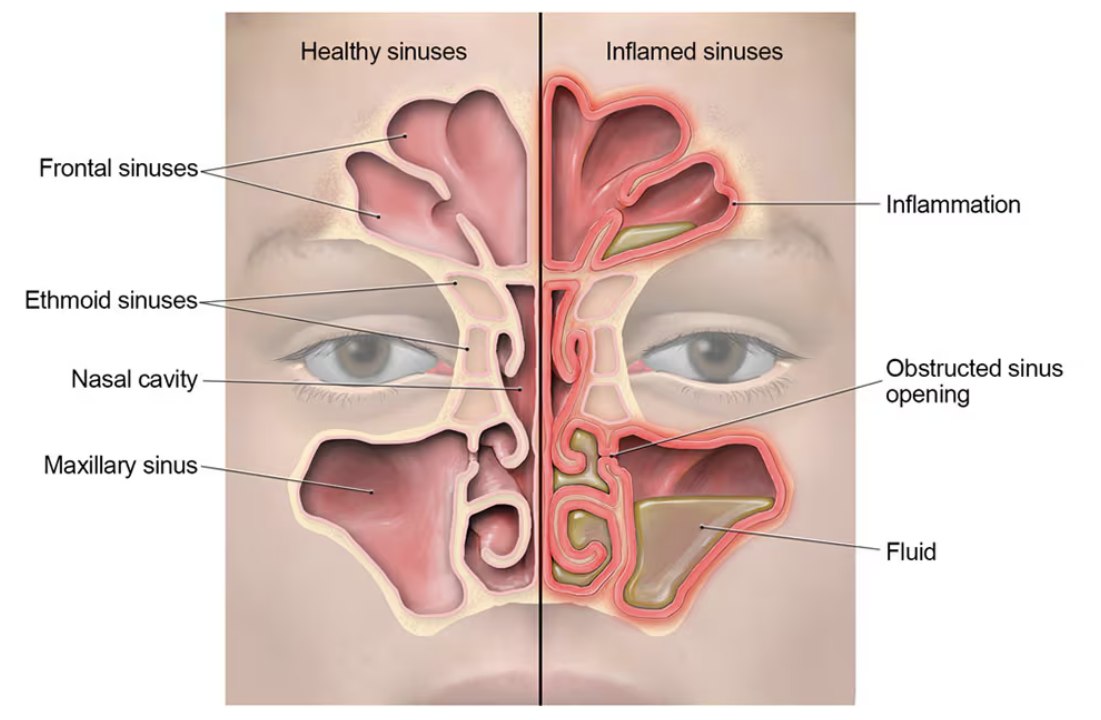
Comparison of healthy vs. inflamed sinuses. Anatomical diagram showing the frontal, ethmoid, and maxillary sinuses in a normal state (left) versus sinusitis (right), with visible inflammation, obstructed sinus openings, and fluid buildup.
How It Happens
A quick walkthrough of what's actually going on, so the treatment makes sense too.
Signs to Watch For
Acute sinusitis usually clears up within a few weeks, often alongside a cold. Chronic sinusitis is diagnosed when symptoms last 12 weeks or longer, or when infections keep coming back despite treatment.
Medication is usually the first step. For chronic or recurring cases, minimally invasive options like Balloon Sinus Dilation or Functional Endoscopic Sinus Surgery can open blocked sinus passages for lasting relief.